Generator kVA Sizing Guide for Sites and Camps
Step by step generator kVA sizing for construction sites and camps in Saudi Arabia, with typical loads and a worked example.
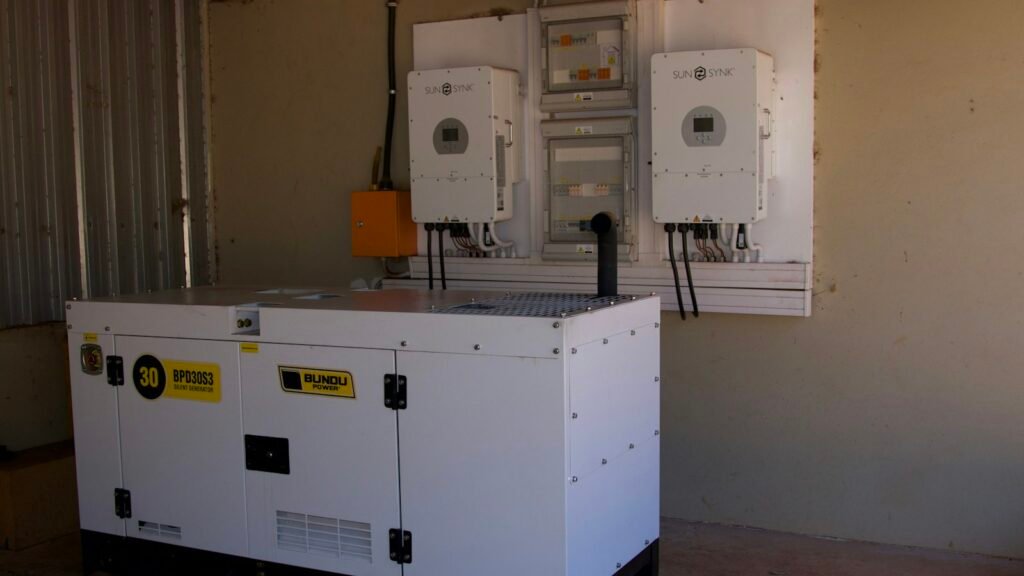
Quick answer: add up the running load in kW, divide by the power factor (usually 0.8) to get kVA, allow for the largest motor start, then add a 20–25% margin. A site with 160 kW of running load needs about 200 kVA before margin, so a 250 kVA set is a sensible choice.
Step by step
- List every load. Lighting, porta cabins and air conditioning, welding machines, pumps, compressors, tools and any motors.
- Add the running kW. Use nameplate values. For three-phase loads where only current is known, kVA = √3 × voltage × current ÷ 1000.
- Convert to kVA. kVA = kW ÷ power factor. Most diesel generators are rated at 0.8 power factor.
- Allow for motor starting. A direct-on-line motor can draw several times its running current when it starts. Start the largest motors first, or use soft starters or variable speed drives to cut the starting load.
- Add a margin. 20–25% covers future loads and keeps the engine in an efficient range.
- Derate for heat. Generator output falls at high ambient temperature and altitude. Saudi summer temperatures above 45 °C mean you should check the manufacturer’s derating table.
Typical site loads
| Load | Typical running power |
|---|---|
| Split AC unit, 2 tons (24,000 BTU) | about 2.0–2.5 kW |
| Office porta cabin 6 m × 3 m with two ACs and lighting | about 5–7 kW |
| Tower light (metal halide, 4 × 1000 W) | about 4 kW |
| Tower light (LED) | about 1–1.5 kW |
| Arc welding machine 400 A | about 15–20 kVA |
These are typical figures for planning. Use the nameplate data of your equipment for the final sizing.
Worked example
A camp has ten office cabins at 6 kW each (60 kW), a mess hall at 30 kW, lighting at 10 kW and a 30 kW water pump. The running load is 130 kW, which is 163 kVA at 0.8 power factor. The pump starts direct-on-line, so allow extra starting capacity, then add 25% margin. A 250 kVA set covers this load, and two sets in parallel or a standby unit protect against breakdown.
Common mistakes
- Sizing on kW and forgetting the power factor.
- Ignoring motor starting, which makes the voltage dip and trips breakers.
- Oversizing a lot, which causes light-load running and wet stacking in diesel engines.
- No derating for summer heat.
Related: generator size guide and generator rental guide.
Frequently asked questions
How do I convert kW to kVA for a generator?
Divide kW by the power factor. At the usual 0.8 power factor, 100 kW is 125 kVA.
How much margin should I add when sizing a generator?
Most planners add 20–25% above the calculated load, plus extra capacity for the largest motor start.
Does heat reduce generator output in Saudi Arabia?
Yes. Output falls at high ambient temperature, so check the manufacturer's derating table for summer conditions.
What size generator does a porta cabin need?
A typical 6 m × 3 m office cabin with two split ACs and lighting uses about 5–7 kW. Size the generator for all cabins together plus margin.
Need a second check? Send the load, site and equipment details to the Ariane Ventures team through the contact page and we will review the selection with you.
This guide is for awareness and early planning. Final values must come from the manufacturer’s data, a site soil report and a lift plan approved by a competent person.
Need equipment?
Call us or send a quote request. Our team helps you choose the right machine and size before you commit.