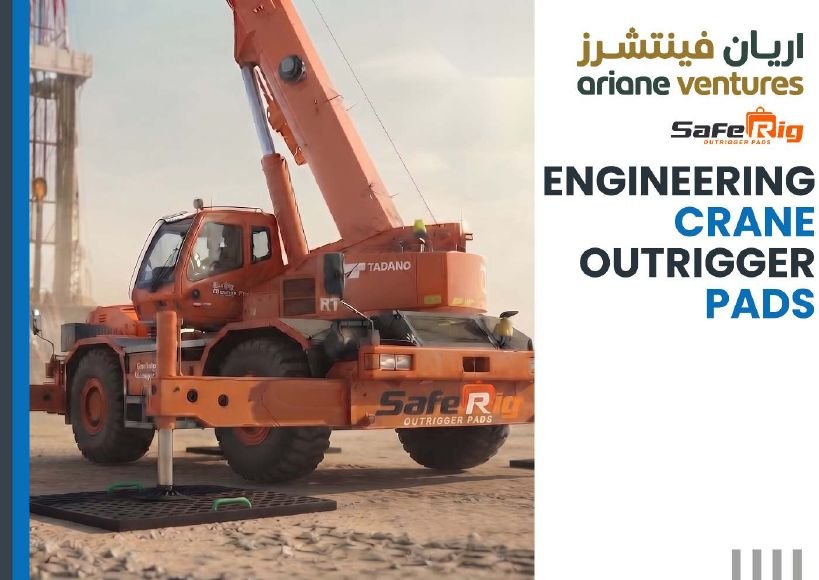
Ground Bearing Pressure and Outrigger Pad Sizing Guide
Learn how to calculate outrigger pad size from crane outrigger load and ground bearing pressure, with Saudi site values and a worked example.
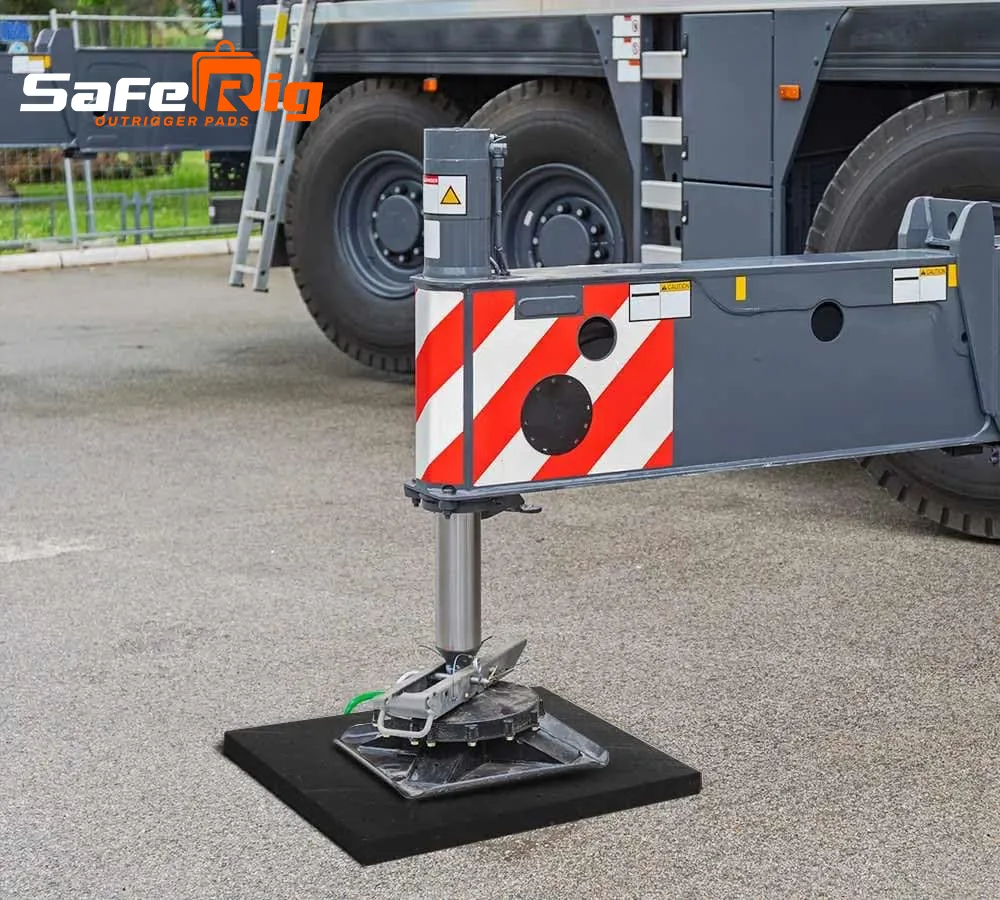
Quick answer: divide the maximum outrigger load by the allowable ground bearing pressure to get the pad area you need. A 600 kN outrigger load on ground rated at 200 kPa needs at least 3.0 m² of pad, for example a 1.8 m × 1.8 m pad.
Why ground bearing matters on Saudi sites
Most crane incidents on soft ground start under one outrigger. Eastern Province sites often have sabkha, loose wind-blown sand or backfilled trenches close to the set-up area. These soils can look firm on the surface and still settle under a concentrated load. A correctly sized outrigger pad spreads the load so the ground pressure stays below what the soil can carry.
The basic calculation
- Find the maximum outrigger load. Use the crane manufacturer’s outrigger load calculator or the lift planning software for the actual configuration, radius and slew position. If no data is available yet, many lift planners use about 75% of the crane weight plus the load as a conservative first estimate for one outrigger.
- Get the allowable ground bearing pressure. Take it from a geotechnical report or a plate load test. Do not guess on sabkha or fill.
- Calculate the pad area. Required area (m²) = outrigger load (kN) ÷ allowable bearing pressure (kPa).
- Check the pad itself. The pad must be stiff enough to spread the load across its full area. Thin or small pads concentrate the load in the middle.
Indicative allowable bearing pressures
| Ground type | Typical range (kPa) | Comment |
|---|---|---|
| Soft clay, wet sabkha | 25–75 | Needs a soil report, often mats plus pads |
| Loose sand, uncompacted fill | 50–100 | Compact or replace before set-up |
| Compacted sand and gravel | 200–400 | Common on prepared lay-down areas |
| Dense gravel, weathered rock | 400–600 | Confirm depth of the layer |
| Reinforced concrete slab | Depends on design | Ask the slab designer, check for voids and services |
These ranges are general engineering values for early planning only. Your site value comes from testing.
Worked example
A mobile crane and load total 80 t. The first estimate for one outrigger is 0.75 × 80 t = 60 t, about 590 kN. The soil report gives 150 kPa. The required area is 590 ÷ 150 = 3.9 m², so a 2.0 m × 2.0 m pad (4.0 m²) is the minimum. Where the ground is weaker, a crane mat under the pad spreads the load further.
Choosing pad material
- UHMWPE pads are light, do not rot or absorb water and are easy to handle on site. Ariane supplies SafeRig UHMWPE outrigger pads through its group company Diode Trading.
- Timber mats are cheap but absorb water, crack and lose stiffness over time.
- Steel plates are stiff but heavy and need lifting equipment to place.
Site checklist before set-up
- Ground conditions confirmed by test or report, with a record in the lift plan.
- No trenches, buried services, voids or recent backfill under any outrigger.
- Pads level, centred under the outrigger float and fully supported.
- Pad size and rating written in the lift plan and checked by the lift supervisor.
- Re-check after rain or water spills, which can soften sabkha quickly.
Related: crane set-up on sabkha ground, how to plan a critical lift and outrigger pads in Saudi Arabia.
Frequently asked questions
How do I calculate the outrigger pad size?
Divide the maximum outrigger load in kN by the allowable ground bearing pressure in kPa. The result is the minimum pad area in square metres.
What ground bearing pressure should I use for sabkha?
Use the value from a geotechnical report or plate load test. Sabkha can be very weak when wet, so it should never be assumed.
What share of the total weight goes on one outrigger?
It depends on the crane, radius and slew position. Use the manufacturer's calculator. For early planning many lift planners use about 75% of crane plus load.
Are UHMWPE outrigger pads better than timber?
UHMWPE pads are lighter, do not absorb water or rot and keep their stiffness, so they usually last much longer than timber on Saudi sites.
Need a second check? Send the load, site and equipment details to the Ariane Ventures team through the contact page and we will review the selection with you.
This guide is for awareness and early planning. Final values must come from the manufacturer’s data, a site soil report and a lift plan approved by a competent person.
Need equipment?
Call us or send a quote request. Our team helps you choose the right machine and size before you commit.